


«Electric vitamins increase the speed of visual-motor response».

Приглашаем на «Ночь музеев 2025»
14.05.2025
В России начались продажи лежака доктора redox «Гальванопара» с нано-кристаллитами серебра и меди
17.09.2025Дата публикации: 15 мая 2025 , 14:26
The article discusses the unique phenomenon of "electric vitamins" — the generation and consumption of electric current by humans when walking barefoot on low-resistance conductors. A study based on placebo-controlled experiments examines the effect of these currents on cognitive brain functions. The authors ask themselves: are electric vitamins a vestige or an important evolutionary factor that should be preserved in the conditions of urbanization? The article aims to draw the attention of the scientific community to this phenomenon and open up new areas of research in the field of human physiology.
Annotation
This article is dedicated to experiments that describe the phenomenon of generation and consumption of electric current—hereinafter referred to as «electric vitamins»—by humans while walking barefoot on low-resistance conductors. This phenomenon was initially described in the «Physicists’ Tale,» which was awarded a special prize by the Foundation of Nobel laureate V.L. Ginzburg and published in the almanac Uspekhi Physiki in 2005, a year declared by UNESCO as the «Year of Miracles.» In this article, we attempt to answer the question: Are electric vitamins merely a vestige of the past, or are they one of the evolutionary factors that should be preserved despite the pressures of urbanization? Our aim is not to determine the mechanisms of action or other theoretical aspects of electric vitamins but to bring this phenomenon to the attention of the scientific community. The study was a placebo-controlled investigation employing methods such as electroencephalography, chronoamperometry, and visual-motor response measurement. While previous experiments on the effects of electricity on the brain utilized external current sources, this study focuses on currents of exclusively endogenous origin. The influence of electric vitamins on cognitive functions of the brain opens new avenues for research in the field of human physiology.
Keywords: electric vitamins, neuroplasticity, electroencephalography, placebo-controlled study, visual-motor response.
Introduction
Studies involving the application of weak electric currents (0.5 mA — 2 mA) through the scalp have demonstrated neuroplastic effects, leading to consequent impacts on various cognitive functions of the brain, including working memory (2), speech (3), thinking (4), perception (5), attention (6), and decision-making (7). These brain responses were elicited using external electric current sources. Our study, however, is based on the phenomenon of current generation that occurs naturally when walking barefoot on the ground.
The influence of electric vitamins on heart rate variability is already established. It has been proven that long-term daily exposure to currents of endogenous origin activates both the sympathetic and parasympathetic branches of the autonomic nervous system, increasing the relative contribution of the parasympathetic branch in heart activity regulation—evidenced by an increase in heart rate variability due to decreased sympathetic activity (8). Additionally, a statistically significant effect of electric vitamins on the bioelectrical activity of the brain has been observed (9). However, there has been no consensus in the interpretation of these results, and no definitive evidence of a beneficial effect has been provided.
It is hypothesized that electric vitamins may enhance other functional capabilities of the organism by influencing neuroplasticity (10). While the use of external electric currents, such as in transcranial electrical stimulation, is known to affect the brain (11-13), this article confirms the positive effects of electric vitamins on the brain’s functional state, specifically by increasing the speed of visual-motor reactions in individuals.
Materials and methods
Equipment used: Electrodes-sensors-redox (14), recorder-translator «Elins R20X», PC, smartphone, metronome, electroencephalograph «Neurosoft», Faraday cage, and variable resistor PPML-IM 10.
In the present study, the effect of an electric circuit loop (Fig. 1) on the functional state of the human brain was investigated.

(R1 is the resistance of the epidermis of the left foot; R2 is the resistance of the epidermis of the right foot; R3 is the resistance of the earth; r1 is the resistance of the person as a current source)
Ohm’s law for an equivalent electrical circuit of walking barefoot on the ground is expressed as:
I = U/R1+R2+R3+r1
A human being is considered a generator of electric current. Figure 2A illustrates a model of electric vitamin generation when walking barefoot on wet grass, while Figure 2B depicts the design of an experiment that replicates this scenario.

A group of volunteers aged 22 to 50 years, comprising both sexes, participated in the experiment. The criteria for exclusion from the study were as follows: age younger than 22 years or older than 50 years; and the use of any pharmacological agents from the following drug groups: vegetotropic, haematotropic, intermediants, neurotropic agents, hormones, and antagonists. All subjects were right-handed.
Investigation of the effect of electric vitamins on the bioelectrical activity of the brain by electroencephalography.
The electroencephalogram (EEG) was recorded in a Faraday cage while the subjects interacted with sensor-redox electrodes. A Neurosoft encephalograph was used for EEG acquisition. Three subjects participated in the experiment, each of whom underwent the experiment twice.
Description of electrodes-sensors-redox:
Mechanics: The equidistance between crystallites (spikes, spheres) is maintained by an equilateral triangle with a side length of 6.28 mm (2π) and a height of 5.44 mm (2e).
Copper crystallites, grown over five hours through electroplating, are coated with a 6 µm thick layer of gold, ensuring that no galvanic pairing occurs between the two sensor-redox electrodes. However, experiments were conducted only when the magnitude of the currents in a stationary person did not exceed 100 nA. The crystallites have a branched fractal structure, and their equidistance ensures good (qualitative) reproducibility of human bioelectrical parameters. Additionally, the absence of burrs—sharp protrusions—eliminates potential trauma, ensuring that no living tissue cells are damaged during the use of the electrodes-sensors-redox. The main limitation of using redox sensor electrodes is the potential for skin trauma on the feet under excessive load. In the experiments conducted, the total load on the redox electrodes did not exceed 78 kg (156 g per crystallite). Under such a load, the redox sensor electrodes stretch the skin due to mechanical impact without exceeding its elastic limits; the skin’s elastic deformation during these experiments did not transition into plastic deformation.
A photograph of the electrode-redox is shown in Figure 3.

In all the conducted experiments, the resistance of the electrodes-sensors-redox was neglected, allowing a human to be used as a power source in short-circuit mode. To confirm the absence of a galvanic pair, an initial control experiment was conducted, in which the human currents were equal to zero in a state of equilibrium with the electric circuit closed.
Three male and two female subjects, all middle-aged and without abnormalities or pathologies, participated in the research.
The volunteers stepped on the electrodes, shifting their weight from foot to foot without lifting their feet off the electrodes, in rhythm with a metronome set at a frequency of 0.8 Hz. This frequency was chosen as it closely matches the natural rhythm of human walking. A control EEG acquisition was performed for all subjects. The placebo effect was achieved by alternately closing and opening the electric circuit. When the person was standing on two separate electrodes-sensors-redox connected by a conductor, but the circuit was open (i.e., the key was open), no electric current flowed, and therefore, the electric vitamins had no effect, although the mechanical pressure on the feet remained constant. The subjects were unaware of whether the circuit was closed or open during any given period, thus ensuring the placebo effect. Figure 4 shows the circuit diagram with the key used to open and close the electric circuit.

(R1 is the resistance of the epidermis of the left foot; R2 is the resistance of the epidermis of the right foot; r1 is the resistance of the person as a current source.)
Ohm’s law for a circuit diagram with an opening key is as follows:
I = U/R1+R2+r1
It is worth noting that the study did not aim to measure the variable resistance of the epidermis of the human feet during the process of transferring body weight from one foot to the other, although this resistance undoubtedly contributed to the ammeter readings.
Investigation of the Effect of Electric Vitamins on the Alteration of Human Visual-Motor Response.
A group of 10 subjects participated in the experiment, with each subject undergoing the experiment twice.
To record the speed of the visual-motor reaction, we used a technique that measured the human reaction time to the changing color of a smartphone screen. The subjects pressed a button with their finger when the screen changed from red to green. The design of the experiment is illustrated in Figure 2B.
To detect the effect of electric vitamins on the human brain, we used sensor-redox electrodes connected in series in an electrical circuit with an ammeter (Elins P20X potentiostat). During the test, the volunteers transferred their body weight from foot to foot (without lifting their feet from the electrodes-sensors-redox) in rhythm with a metronome set at a frequency of 0.8 Hz for 5 minutes. The experimental conditions were standardized for each volunteer: identical posture, consistent degree of foot moisture, testing with the dominant hand, and the same time of day for each experiment. Each volunteer underwent the experiment twice, with a 7-day interval between trials. To account for the placebo effect, the experiments were conducted with both the electric circuit closed and open, with the volunteers unaware of the circuit’s state. To eliminate the factors of learning effects and subject fatigue, the experiment was carried out with a varied sequence of circuit closing and opening.
To determine the limits of action of electric vitamins, an experiment involving additional resistance was conducted on three volunteers. In order to simplify the experiment, the earlier fixation of electric current was excluded. A variable resistor (PPML-IM 10) was connected in series with the electrical circuit between the sensor electrodes. During the experiment, which measured the speed of visual-motor response, the external resistance was increased by 0.5 kOhm every 30 seconds, starting at 0 kOhm and ending at 10 kOhm. The closed and open states of the electrical circuit were also considered as the limit points of the measurement. Figure 5 illustrates the circuit diagram of the experiment using the variable resistor.

(R1 is the resistance of the epidermis of the left foot; R2 is the resistance of the epidermis of the right foot; R3 is the resistance of the variable resistor; r1 is the resistance of the person as a current source)
Ohm’s law for a circuit diagram with an opening key is as follows:
I = U/R1+R2+R3+r1
Statistical analysis of the obtained data was performed using the OriginPro 10 program. The mean and standard deviation were calculated for data with a normal distribution. When comparing sample means for data with a normal distribution, the Student’s t-test was applied, while the Mann-Whitney test was used if the normality condition was not met. For all types of analyses, p-values of less than 0.05 were considered statistically significant. The measurement error for visual-motor reaction speed was assumed to be 3% due to the limitations in the accuracy of the device used to measure visual-motor reaction time.
Results and discussion
Investigation of the effect of electric vitamins on the bioelectrical activity of the brain by electroencephalography.
Figure 6 shows the brain mapping data obtained in the closed-loop and open-loop EEG acquisition experiments.

Figure 7 shows the total power of the alpha rhythm when the circuit is closed and open.
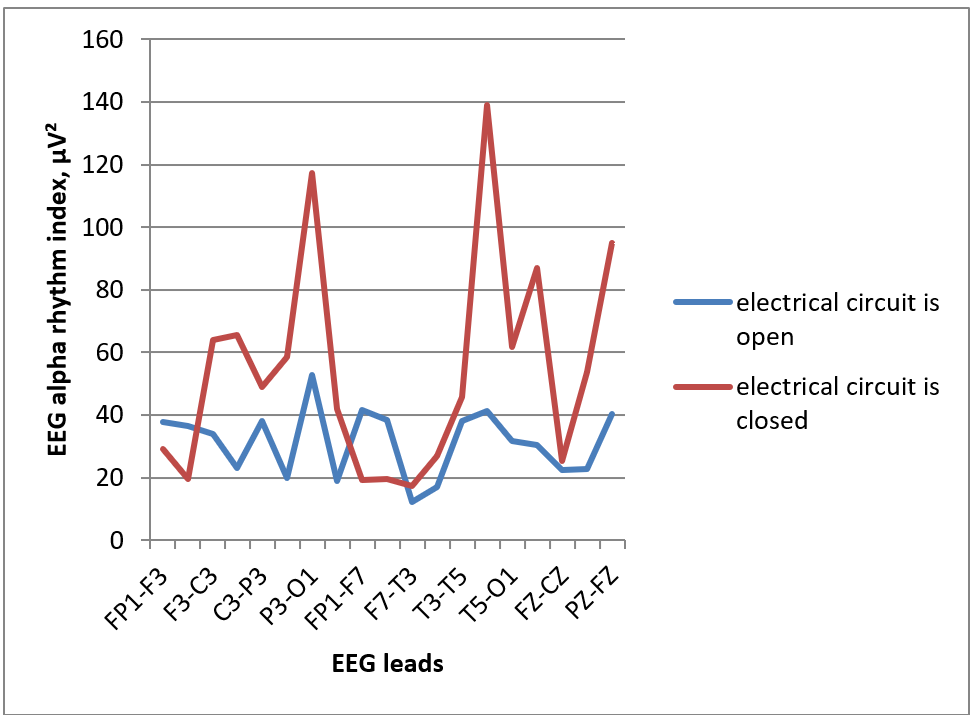
Figure 8 shows the alpha rhythm index for closed and open circuit.
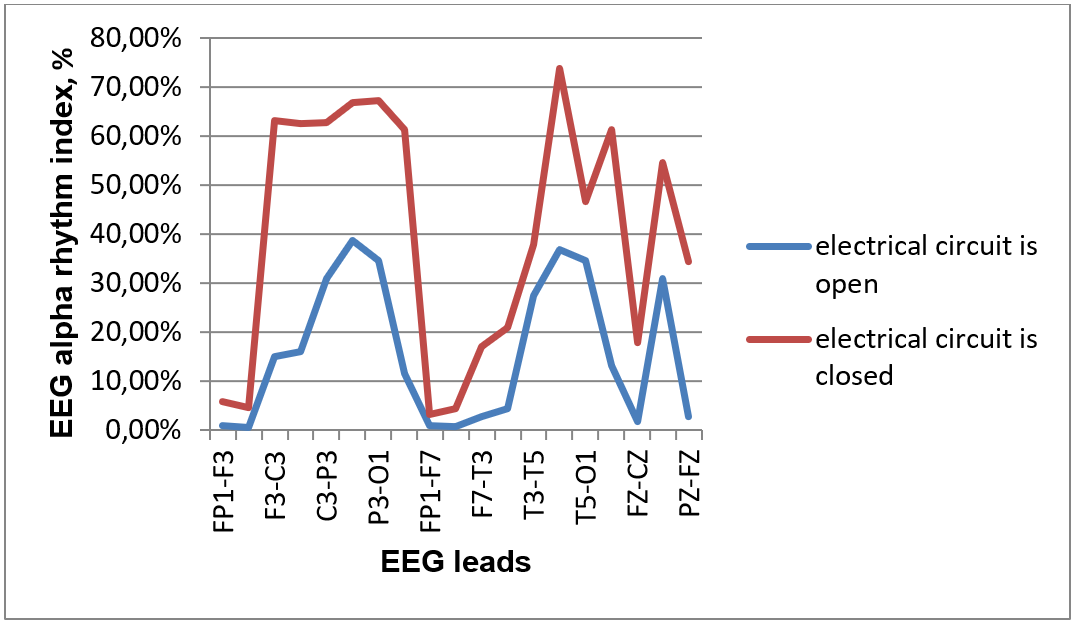
There was a significant increase in power and alpha rhythm index in the closed circuit compared to the open circuit. Additionally, there was a decrease in alpha rhythm asymmetry, primarily in the posterior leads.
The EEG experiments demonstrate the online effect of electric vitamins on the total bioelectrical activity of the brain. This finding aligns with studies by other authors on the effects of transcranial electrical stimulation on EEG activity, particularly regarding changes in alpha rhythm (13, 15).
Investigation of the Effect of Electric Vitamins on the Alteration of Human Visual-Motor Response
It was hypothesized that the effect of electric vitamins on the brain would not only manifest in changes in its bioelectric activity but also impact its functional capabilities. Therefore, the next objective of the experiment was to record changes in the brain’s functional capabilities when receiving electric vitamins. The human visual-motor response was chosen as the method of research. The evaluation of the visual-motor reaction is a relatively simple and accurate indicator of the neurodynamic properties of the nervous system (16). The speed of the visual-motor reaction was calculated using the formula: treaction-1 [sec-1].
Table 1 — results of measuring the speed of visual-motor reaction with closed and open electrical circuit
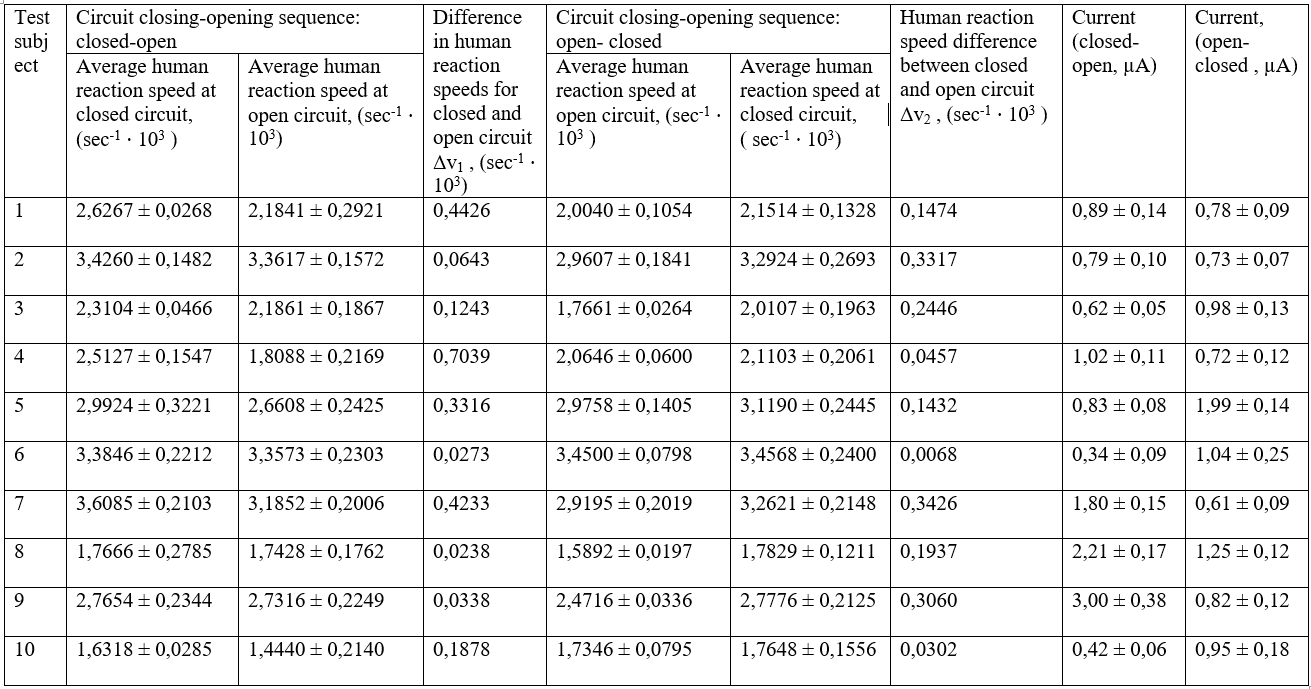
The results of the measurements of the subjects’ visual-motor reactions in experiments with closed and open circuits indicate that the average speed of the visual-motor reaction increases with a closed circuit. However, it should be noted that 10 out of 20 samples are statistically significant (p<0.05). Figures 9 and 10 present typical curves showing changes in the speed of the human visual-motor reaction when the sequence of closing and opening the electric circuit is altered.
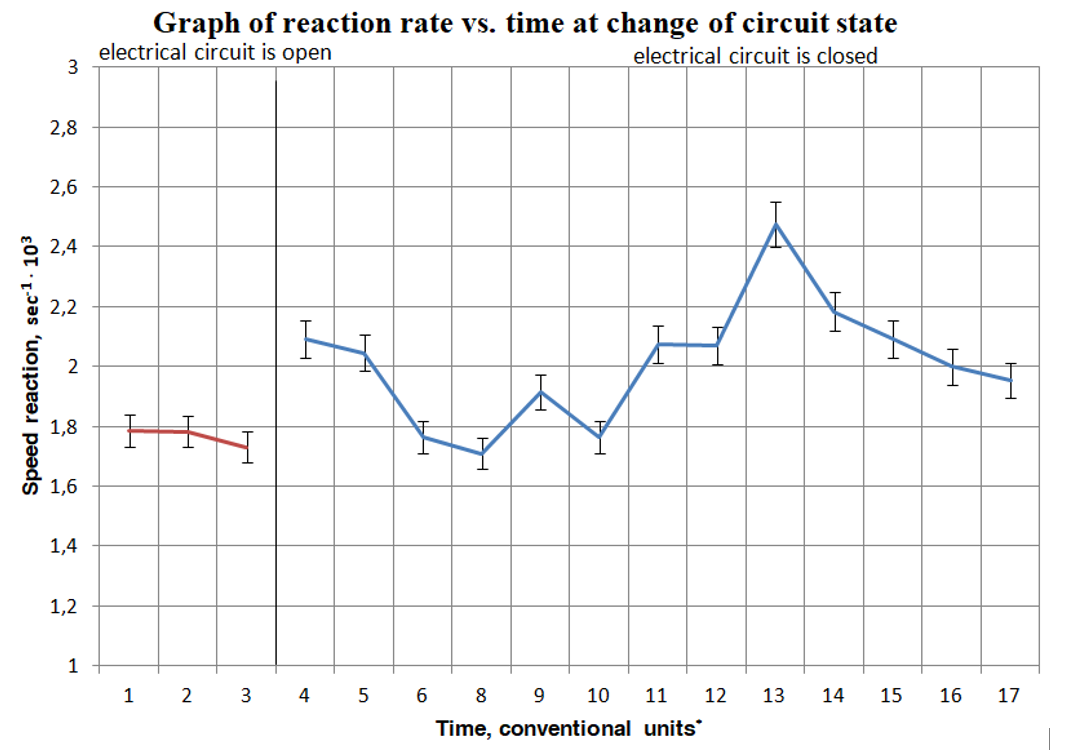
*- The conditional unit of time is equal to the time of five reaction rate measurements.
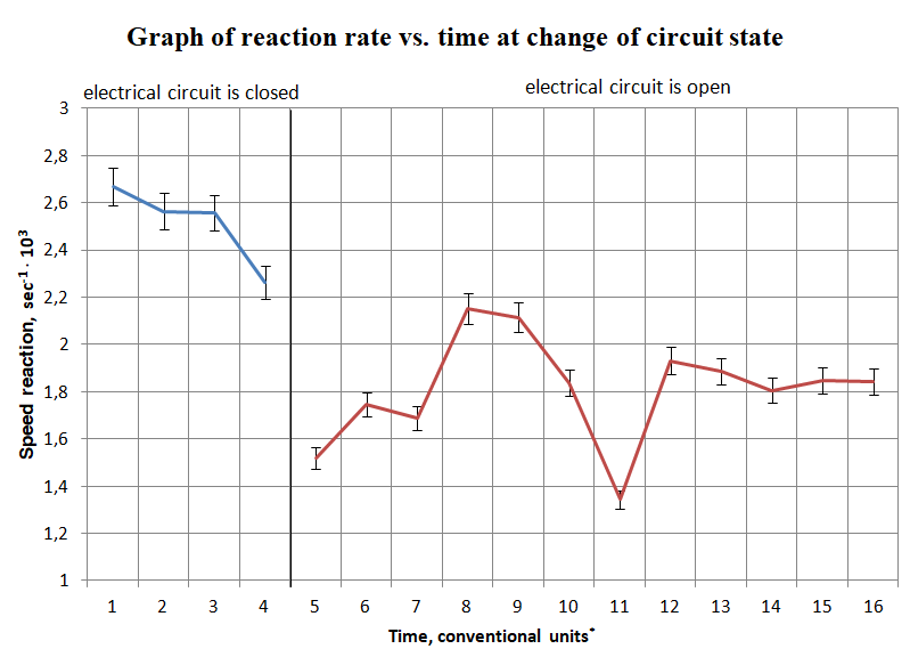
*- The conditional unit of time is equal to the time of five reaction rate measurements.
Statistically significant differences in the speeds obtained from 10 experiments were divided according to the sequence of the circuit transition from closed to open and vice versa, with a ratio of 4:6, respectively. This indicates that the sequence of closing and opening the electric circuit does not significantly affect the resulting increase in the speed of the visual-motor reaction.
Based on the data from the experiment with the closed and open circuit, it was suggested that the resistance of the natural human environment—ranging from the edge of the sea to the desert—affects the state of the brain differently. The next experiment was designed using an electric circuit with a variable resistor (Fig. 6).
Figure 11 shows a typical graph illustrating the dependence of the speed of the visual-motor reaction on the external resistance of the variable resistor.

As shown by the curve in Fig. 11, the speed of the visual-motor reaction decreases in direct proportion to the increase in the external resistance of the electric circuit. Thus, a correlation between the value of the electrical circuit resistance and the visual-motor reaction of a person was established.
In this study, we demonstrate that electric vitamins act directly on the brain. The alpha rhythm of the brain is considered one of the most informative indicators in studies of brain electrical activity (17). In our paper, the activity of the alpha rhythm is one of the key variables. An increase in the total power of the alpha rhythm in closed circuit experiments was observed, likely indicating an increase in wakefulness. Additionally, the effect of electric vitamins was shown to accelerate the human visual-motor response. We believe that this result was achieved due to an increase in the neuroplasticity of the brain. We hypothesize that the increase in reaction speed is attributed to a reduction in the time required for information processing in the brain and the formation of a response to a stimulus. Electric vitamins appear to enhance the adaptive capabilities of the brain, helping individuals adjust more effectively to environmental conditions, increase stress resistance, and accelerate feedback mechanisms in the body, such as hormonal regulation. According to one hypothesis, humans have been receiving electric vitamins for 4 million years, suggesting that electric vitamins are a physiological necessity that has made a significant contribution to human evolutionary development. We propose that electric vitamins may assist the human body in maintaining energy balance.
Although the exact mechanism of action of electric vitamins on the brain remains to be elucidated, their practical significance for humans is already evident. The increase in the speed of visual-motor reaction is reflected in the overall dynamics of nervous processes, their switching, and the general level of performance and activity of the central nervous system (CNS).
Electric vitamins have significant potential applications in digital medicine, particularly in the monitoring of human physiological parameters. Additionally, electric vitamins could form the basis for the interaction between two redox systems: human and Earth. Bioelectrical data obtained from a large number of people worldwide could potentially be used for the indication of natural, anthropogenic, and social phenomena.
With the advent of footwear and its analogues that include dielectric soles, coupled with ongoing urbanization, humans have lost the opportunity to receive electric vitamins on a daily basis. Based on the results of this study, we believe it is essential to preserve electric vitamins in daily life as a necessary factor of evolution, helping humans better adapt to environmental conditions.
Conclusions
The method of electroencephalography confirmed the real-time influence of electric vitamins on the bioelectric activity of the brain. Functional improvement in brain performance was observed through the study of the human visual-motor reaction, specifically its acceleration when receiving pure electric energy of endogenous origin—electric vitamins. A correlation was found between the value of electrical circuit resistance and the functional state of the brain, demonstrating a proportional slowing of the visual-motor reaction speed as the electrical circuit resistance increases. For further exploration of the phenomenon of electric vitamin generation and its effects on the human organism, we propose the continued use of redox electrodes and the ongoing investigation of currents of endogenous origin.
List of references
- The Tale of Dr Redox’s Electric Vitamins by Scientific World Publishing Ltd ISBN 978-5-91522-347-8.
- Fregni E, Boggio P. S., Nitsche M. A., Bermpohl E, Antal A., Feredoes E., Marcolin M.a., Rigonatti S.P., SilvaM.T.A., Paulus W., Pascual-Leone A. Anodal transcranial direct current stimulation of prefrontal cortex enhances working memory // Experimental Brain Research. 2005. Vol. 166. No. 1. P.23-30. doi:10.1007/s00221-005-2334-6
- Sparing R., DafotakisM., Meister I. G., Thirugnanasam- bandam N, Fink G. R. Enhancing language performance with non-invasive brain stimulation. A transcranial direct current stimulation study in healthy humans // Neuropsychologia. 2008. Vol.46. No.l. P.261-268. doi:10.1016/j.neuropsychologia. 2007.07.009
- ZmigrodS., Colzato L.S., HommelB. Stimulating creativity: Modulation of convergent and divergent thinking by transcranial direct current stimulation (MGS) // Creativity Research Journal. 2015. Vol. 27. No. 4. P. 353-360. doi:10.1080/10400419.2015.1087280
- Antal A., Nitsche M. A., Kruse W, Kineses T.Z., Hoffmann K-P., Paulus W. Direct current stimulation over V5 enhances visuomotor coordination by improving motion perception in humans 11 Journal of Cognitive Neuroscience. 2004. Vol. 16. No. 4. P. 521-527. doi: 10.1162/089892904323057263 (0,4)
- Stone D. B., Tesche C. D. Transcranial direct current stimulation modulates shifts in global/local attention // NeuroReport. 2009. Vol. 20. No. 12. P. 1115-1119. doi:10.1097/ wnr,0b013e32832e9aa2
- Hecht D, Walsh V., Lavidor M. Transcranial direct current stimulation facilitates decision making in a probabilistic guessing task // Journal of Neuroscience. 2010. Vol. 30. No. 12. P. 4241-4245. doi:10.1523/jneurosci.2924-09.2010
- Mukhina I.V. Influence of applicator «Lezhak Doktor Redoks» on variability of heart rhythm of young age persons — 2005.
- Laptev A.V., Bugrova E.S., Volkov V.V., Bugrov S.L. Investigation of the influence of electric currents registered during foot irritation by all-metal conductive Dr Redox Ledge on bioelectrical activity of the brain — 2018.
- Yusupov, F. A. Neuroplasticity and possibilities of modern neurorehabilitation / F. A. Yusupov, A. A. Yuldashev // Bulletin of science and practice. — 2022. — Т. 8, № 3. — С. 251-273. — DOI 10.33619/2414-2948/76/27. — EDN UTVGJM.
- Antal A., Boros K, Poreisz C., Chaieb L., Terney D., Paulus W. Comparatively weak after-effects of transcranial alternating current stimulation (tACS) on cortical excitability in humans 11 Brain Stimulation. 2008. Vol. 1. No. 2. P. 97-105. doi:10.1016/j. brs.2007.10.001
- Batsikadze G., Moliadze V, Paulus W, Kuo M.-E, Nitsche M. A. Partially non-linear stimulation intensity-dependent effects of direct current stimulation on motor cortex excitability in humans 11 The Journal of Physiology. 2013. Vol. 591. No. 7. P. 1987-2000. doi:10.1113/iphysiol.2012,249730
- Helfrich R. E, Knepper H, Nolte G, Strüber D, Rach S, Herrmann C. S., Schneider T R., Engel A. K Selective modulation of interhemispheric functional connectivity by HD-tACS shapes perception // PLoS Biology. 2014. Vol. 12. No. 12. P.el002031:l-15. doi: 10.1371/journal.pbio. 1002031
- Patent 2023111109/14, IPC A61B 5/0533 (2021.01).
- Kasten F. H, Herrmann C. S. Transcranial alternating current stimulation (tACS) enhances mental rotation performance during and after stimulation // Frontiers in Human Neuroscience. 2017. Vol. 11. P.2:l-16. doi:10.3389/fnhum.2017.00002
- Visual-motor reactions as an indicator of the functional state of the Central Nervous System / Yu. P. Ignatova, I. I. Makarova, K. N. Yakovleva, A. V. Aksenova // Ulyanovsk Medical and Biological Journal. — 2019. — № 3. — С. 38-51. — DOI 10.34014/2227-1848-2019-3-38-51. — EDN YHTGFU.
- Bazanova, O. M. Modern interpretation of alpha-activity of EEG / O. M. M. Bazanova // International Neurological Journal. — 2011. — № 8(46). — С. 96-104. — EDN OXDTEB.